Life Crafting: A Novel Intervention to Increase Meaning in Life
If you pay attention to the subheading of this website—“Incomparable: The Art, Philosophy, and Science of Crafting a Meaningful Life”—you’ll notice that meaning in life sits at its centre.
That is no accident. I care deeply about the question of how we can actively shape our own lives so that they feel meaningful—especially in a cultural environment that often pulls attention toward distraction and superficiality.
But this immediately raises a foundational question:
what do I actually mean by meaning in life?
In this context, meaning in life refers to the subjective experience that one’s life forms a coherent whole, is guided by purpose, and genuinely matters. (I will unpack this concept in more detail later.)
A large body of psychological research shows that people who report higher levels of meaning in life—or in one of its core components—also tend to score higher on a wide range of positive outcomes, including:
-
protection against cognitive decline with age
Conversely, higher meaning in life is associated with lower levels of several negative outcomes, such as:
Given all these associated benefits, you might be wondering:
How can I get more meaning in my life?
Fortunately, psychologists are beginning to develop a self-administered intervention known as life crafting that aims to do exactly that.
In this article, I first clarify what psychologists mean by meaning in life. Next, I review a recent pilot study by Andrew D. Napier and colleagues that suggests a promising way to increase it. Because I have also applied this intervention to myself, I share my personal results too. Finally, I offer practical guidelines on how you can benefit from life crafting, drawing on research findings as well as my own experience.
What Do You Mean by Meaning in Life?
Contemporary psychological research typically defines meaning in life using a tripartite model. According to this model, people experience their lives as meaningful when they perceive that their lives possess:
- Purpose: the feeling that one’s actions are guided by deeply held values and long-term goals.
- Coherence: the perception that one’s life forms a coherent narrative, with past experiences, present circumstances, and imagined futures fitting together in a comprehensible way.
- Significance: the subjective experience that one’s life matters, often through positively influencing the lives of others, both now and in the future.
These three components of meaning in life are thought to arise through the satisfaction of the basic psychological needs of relatedness, autonomy, and competence as well as through benevolence. In other words, feeling connected to others, engaging in actions that are self-chosen and effective, and contributing positively to the wellbeing of others all tend to foster higher levels of meaning in life.
What Is the Point of a Life Crafting Intervention?
Life crafting refers to the intentional modification of one’s environment, behaviour, and patterns of thinking in order to better satisfy core psychological needs. A life crafting intervention facilitates this process by guiding individuals to reflect on key aspects of their lives and to design action plans that are aligned with their values and interests.
The ultimate goal of such interventions is to increase meaning in life, subjective wellbeing, and satisfaction of the basic psychological needs for relatedness, autonomy, and competence.
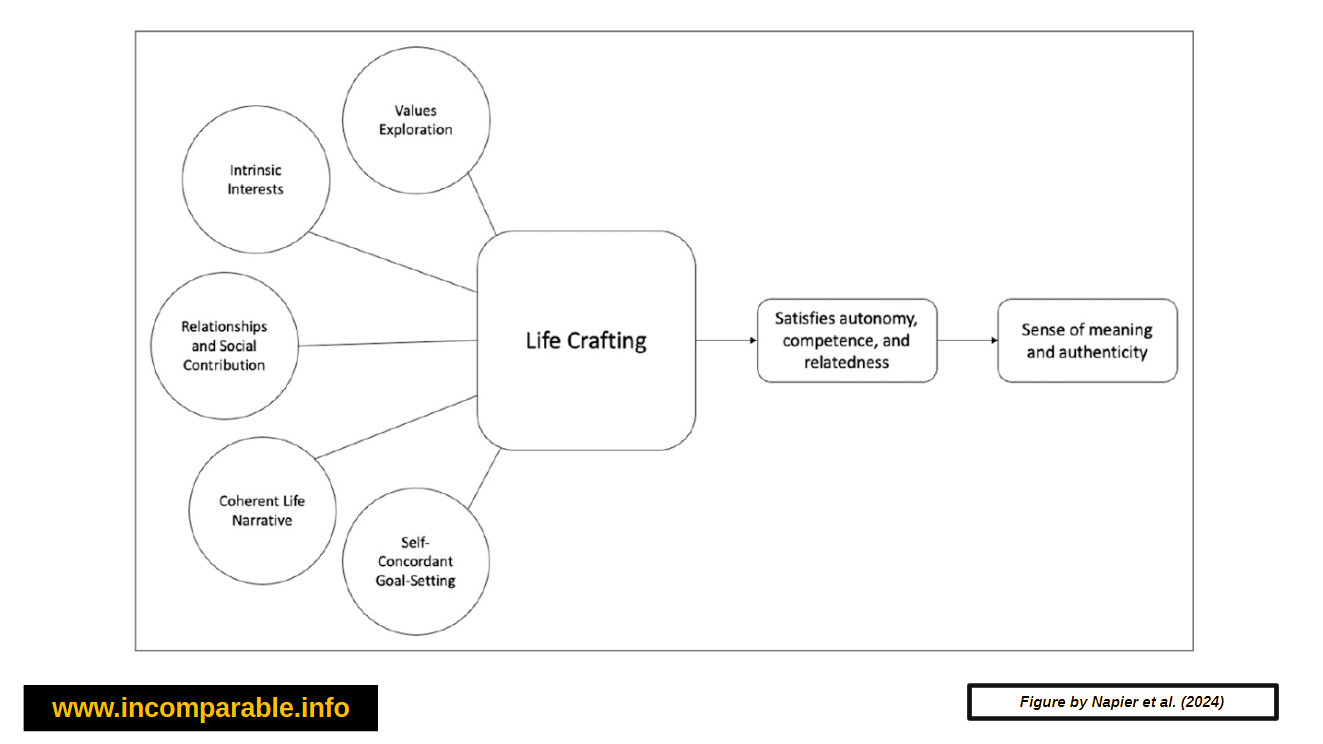
While life crafting interventions can take different forms, the intervention reviewed here follows a five-step process in which individuals reflect on:
- their core values
- their intrinsic interests
- valued relationships and desired social contributions
- their personal life narrative
- and, finally, set goals that are aligned with their values and intrinsic interests
Exploring values and intrinsic interests plausibly enhances a sense of autonomy, while goal setting is likely to strengthen feelings of competence. Together, these processes contribute to a clearer sense of purpose and direction.
Reflecting on important social relationships can increase feelings of relatedness, whereas considering how one’s values and goals benefit others may enhance a sense of significance. Finally, reflecting on one’s life narrative helps integrate key life events into a coherent story, thereby strengthening the experience of coherence.
How Was the Study Done?
The study involved 41 young adults aged 18–29 who completed the same life crafting intervention without any modifications.
At baseline, participants completed several validates measures assessing their levels of:
- subjective wellbeing
- presence of meaning in life
- search for meaning in life
- autonomy satisfaction and frustration
- relatedness satisfaction and frustration
- competence satisfaction and frustration
Following this initial assessment, participants completed the five modules of the life crafting program. Each module was delivered separately, with a three-day interval between modules. Participants were advised to spend approximately 20–30 minutes on each module.
Each module included a short video explaining key concepts, followed by reflective questions. Participants answered these questions privately for themselves without sharing them with the researchers.
Once participants had completed all five modules, they again filled out the same set of validated measures administered at baseline.
All questionnaires and intervention modules used in the study are available here.
Further Details (Click to Expand)
Module 1: Values
Module 1 focused on values. Participants were presented with a list of universal values based on Schwartz’s research and were asked to select their three to five core values. They then reflected on why they chose these values over others, how these values had guided their lives so far, and what people or experiences had helped shape them. Participants were also invited to consider how these values could be put into action, what behaviours were not fully congruent with their values, what they could do differently to live more consistently with them, and the situations in which their core values might conflict with one another.
Module 2: Future Life and Motivation
Module 2 focused on future life and motivation. Participants were encouraged to reflect on how they would like their lives to look in one to five years’ time. Specifically, they considered their future in terms of social life and communities; career or studies; home, leisure, hobbies, and health; and family. They were also asked to imagine how their lives would unfold if nothing changed during that period, and how they would feel in that scenario. Finally, participants reflected on the motivations behind their goals—whether these goals were personally valued, externally pressured, and why they wanted to achieve them.
Module 3: Social Relationships and Contribution
Module 3 shifted the focus to social relationships. Participants were prompted to think about a person who had been especially important in their lives, how this person had supported them in the past, and how they might support them in the future. They also reflected on the type of relationship they would like to have with this person and what actions they could take to strengthen it. Lastly, participants were encouraged to consider how their life goals or future activities might benefit other people or communities.
Module 4: Life Story
Module 4 invited participants to reflect on their life story. They were asked to think of their lives as a story with multiple chapters and to identify their past chapters, their current chapter, and possible future chapters. Participants reflected on what would need to happen to move from the current chapter to the next, how the next chapter might look, and whether there was an overarching theme running through their life story. They also reflected on a past experience that did not go according to plan, what they learned from it, and how it contributed to who they are today. Participants then considered what advice they would give their past selves at that time, as well as the stories they would like to tell their grandchildren or friends in old age—and what they would like others to say about the kind of person they were.
Module 5: Goal Setting
The final module focused on goal setting. Participants first identified four to six short-term goals that would help them progress towards their longer-term aspirations. They then learned how to turn these goals into SMART goals—that is, goals that are Specific, Measurable, Achievable, Realistic, and Time-bounded. Next, participants reflected on potential obstacles that might hinder their progress and developed “if–then” and “when–then” plans to help them cope with these challenges if they arose. They also considered how they would monitor their progress and recognise advancement towards their larger goals. Finally, participants were encouraged to share at least one of their goals with another person to increase accountability.
All intervention modules can be accessed through this link.
Figure above comes from Napier et al. (2024).
What Did the Study Find?
The researchers predicted that the intervention would increase the presence of meaning in life and decrease the search for meaning in life; increase autonomy, competence, and relatedness satisfaction; and decrease autonomy, competence, and relatedness frustration. They also expected wellbeing to increase following the intervention.
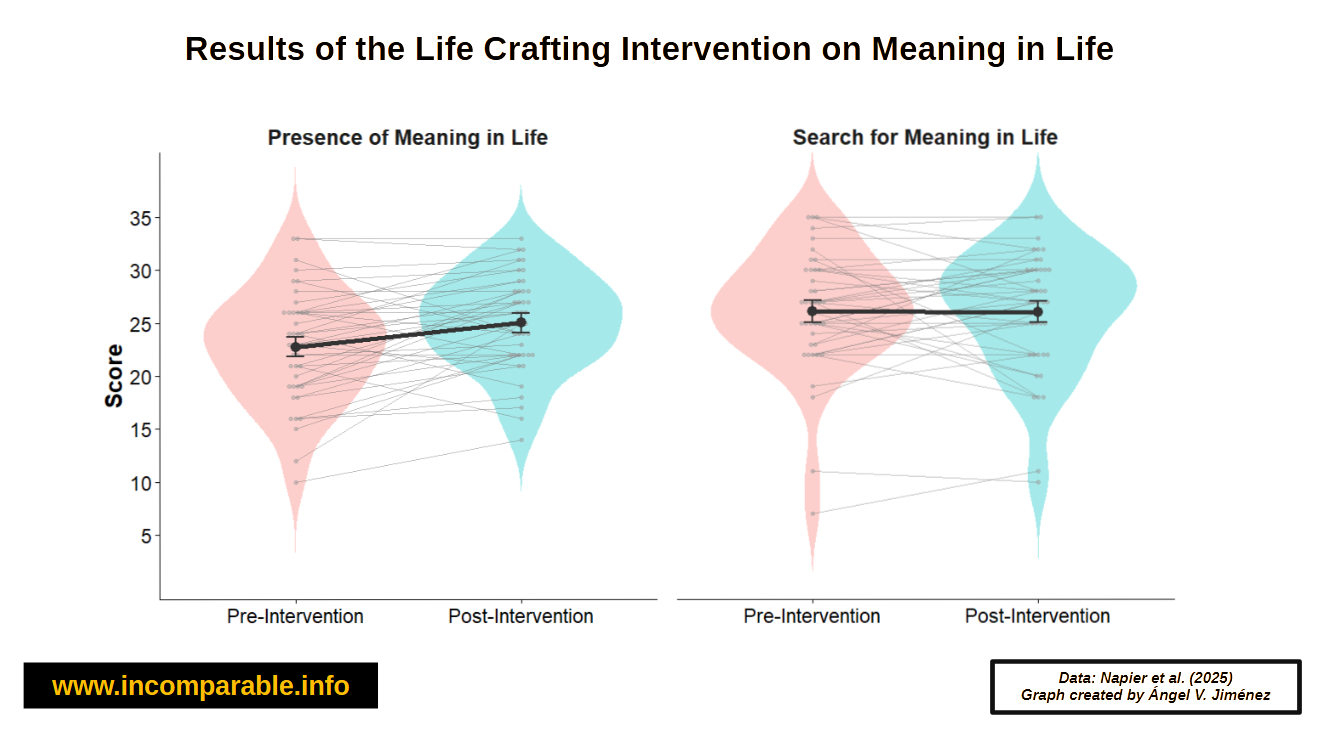
The life crafting intervention was effective in significantly increasing the presence of meaning in life.
Presence of meaning in life increased from 22.75 to 25.04 on a scale ranging from 5 to 35. In contrast, search for meaning in life did not change (26.10 vs. 26.04 on the same 5–35 scale).
The reported results refer to participants’ average scores. I produced the graph below using the publicly available dataset from this study to illustrate individual variation in responses to the intervention.
How to read this figure (click to expand)
The graph above shows participants’ presence of meaning in life and search for meaning in life before (Pre-Intervention) and after (Post-Intervention) the intervention.
The violin shapes represent the distribution of scores at each time point, with wider areas indicating that more participants reported scores in that range. Each dot corresponds to an individual participant, and the thin lines connecting dots show how each person’s score changed from before to after the intervention.
The larger black dots represent the average score at each time point, and the vertical error bars reflect the uncertainty around these averages.
We interpret the figure descriptively: upwards shifts indicate increases in scores over time, downward shifts indicate decreases, and similar scores suggest little overall change. The individual trajectories highlight that participants varied in both the magnitude and direction of change.
Across all figures using the data from the study, the visualisations describe patterns in the observed sample; formal statistical tests are required to determine whether the changes generalise beyond the participants shown here. See Napier et al. (2025) for details.
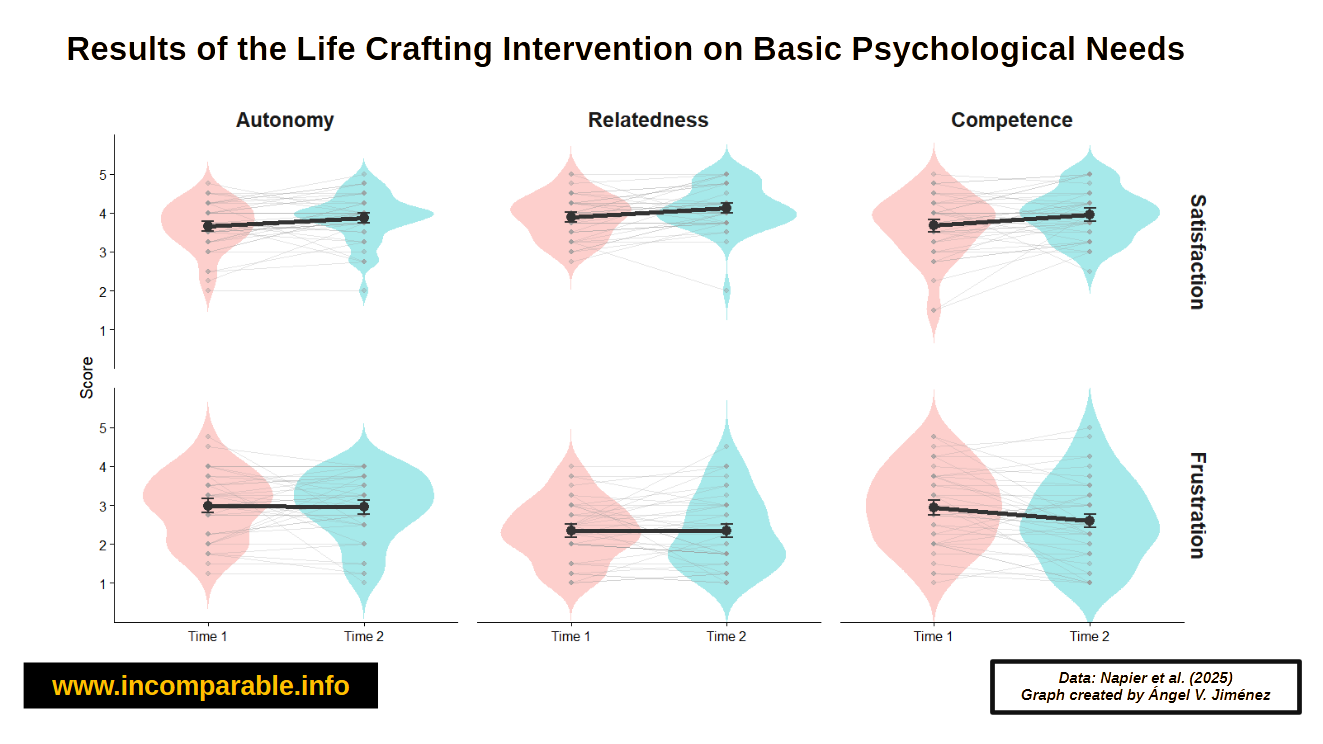
The life crafting intervention was also effective in significantly increasing autonomy, relatedness, and competence satisfaction, and in significantly reducing competence frustration.
Autonomy satisfaction increased from 3.65 to 3.86 on a 1–5 scale. The remaining variables were also measured on a 1–5 scale. Relatedness satisfaction rose from 3.89 to 4.12; competence satisfaction increased from 3.67 to 3.95; and competence frustration decreased from 2.93 to 2.59.
In contrast, autonomy frustration (2.98 vs. 2.95) and relatedness frustration (2.34 at both time points) showed virtually no change.
See graph below for details on individual variation.
How to read this figure (click to expand)
The graphs above show participants’ autonomy, relatedness, and competence, separated into satisfaction (top row) and frustration (bottom row), measured before (Pre-Intervention) and after (Post-Intervention) the intervention.
As in the previous figure, the violin shapes show the distribution of scores, dots represent individual participants, and the thin lines connect each person’s scores across time.
The larger black dots represent the group average at each time point, and the error bars reflect uncertainty around these averages.
We interpret the figure descriptively: upwards shifts indicate increases in satisfaction (or increases in frustration), whereas downward shifts indicate decreases. In the case of frustration, downward shifts reflect improvement (less frustration).
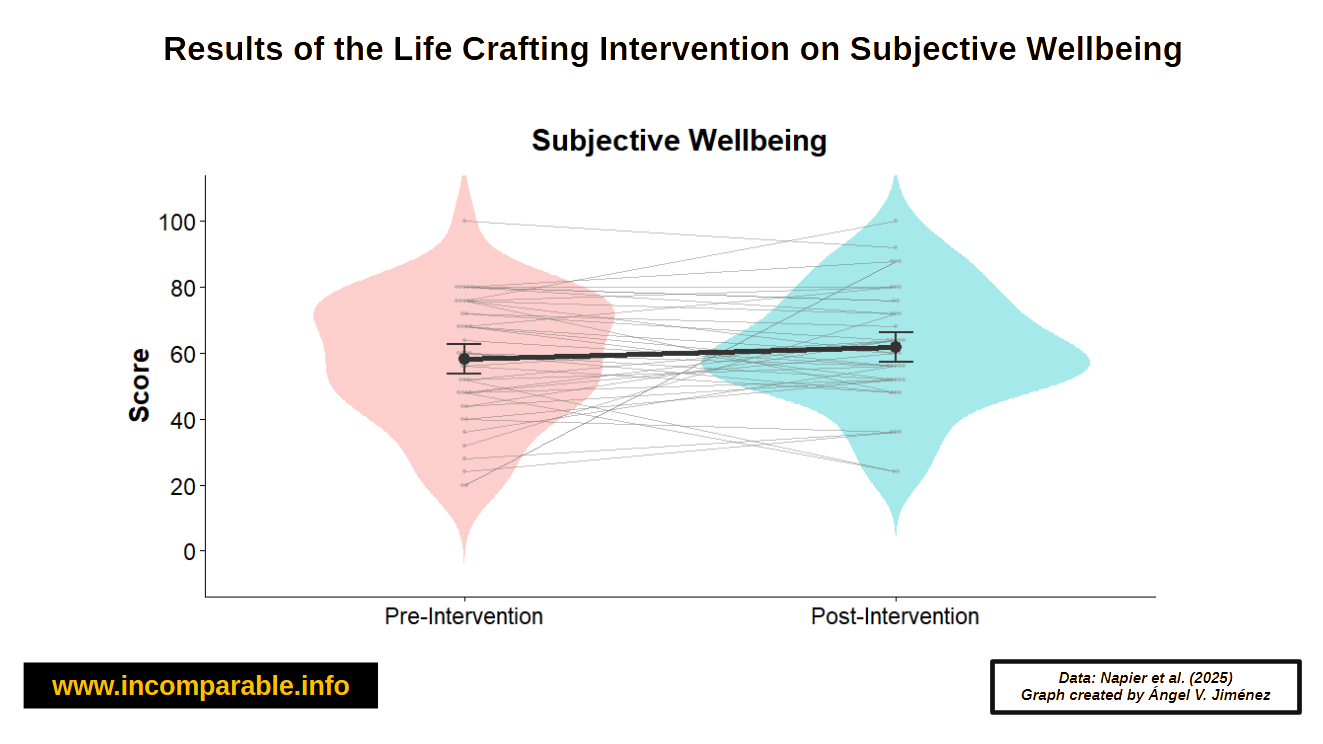
Wellbeing increased as well. It rose from 58.20 to 61.80 on a scale from 0 to 100. However, this difference was not statistically significant, likely due to the study’s small sample size (N = 41).
How to read this figure (click to expand)
The graph above shows participants’ subjective wellbeing scores before (Pre-Intervention) and after (Post-Intervention) the intervention.
The violin shapes represent the distribution of wellbeing scores at each time point, dots correspond to individual participants, and the thin lines show how each person’s wellbeing changed over time.
The larger black dot represents the average wellbeing score, and the error bars reflect uncertainty around this average.
We interpret the figure descriptively: upwards shifts indicate increases in scores over time, downward shifts indicate decreases, and similar scores suggest little overall change. The individual trajectories highlight that participants varied in both the magnitude and direction of change.
What Are the Strengths and Limitations of the Life Crafting Intervention?
The study has several strengths. One of them is that it is theoretically grounded in self-determination theory, the psychological literature on meaning in life, and life crafting as a psychological construct.
The fact that the intervention is part of a larger project (i.e. the PhD thesis of the first author) is also a strength: a scoping review on life crafting was conducted prior to developing the intervention, and a group of volunteers co-participated in its creation. This process likely made the intervention more robust by incorporating participants’ feedback before its first implementation.
Of course, the research also has its limitations. The absence of a control group is an important limitation, as disentangling the effects of the intervention from the mere passage of time is not possible. Nevertheless, the short time frame makes it unlikely that the observed effects are solely a consequence of time passing.
The lack of a follow-up measure is another limitation, as it prevents conclusions about whether the effects of the intervention are temporary or sustained over time. It is also possible that the positive effects of life crafting on meaning in life, the basic psychological needs of autonomy, relatedness, and competence, as well as wellbeing, become stronger when participants take concrete actions based on the decisions made during the intervention. However, the study design does not allow this possibility to be examined.
Moreover, participants’ written responses were not analysed. This is understandable, as it protects participants’ privacy. However, if we aim to better understand individual variation in the effectiveness of the intervention, factors such as the amount of effort, the level of detail in responses, and the realism of goals would need to be examined.
A final limitation is that the three dimensions of meaning in life were not measured separately. Although the intervention is designed to increase all three components—purpose, coherence, and significance—this assumption remains to be empirically tested.
Myself as Case Study for the Life Crafting Intervention
One limitation of published results from psychological interventions like this one is that individual variation is masked by average effects. As a result, we often do not know what makes an intervention effective—or ineffective—for a particular individual.
To address this limitation to some extent, I report my own results with the life crafting intervention here and speculate about possible reasons for them.
My Results
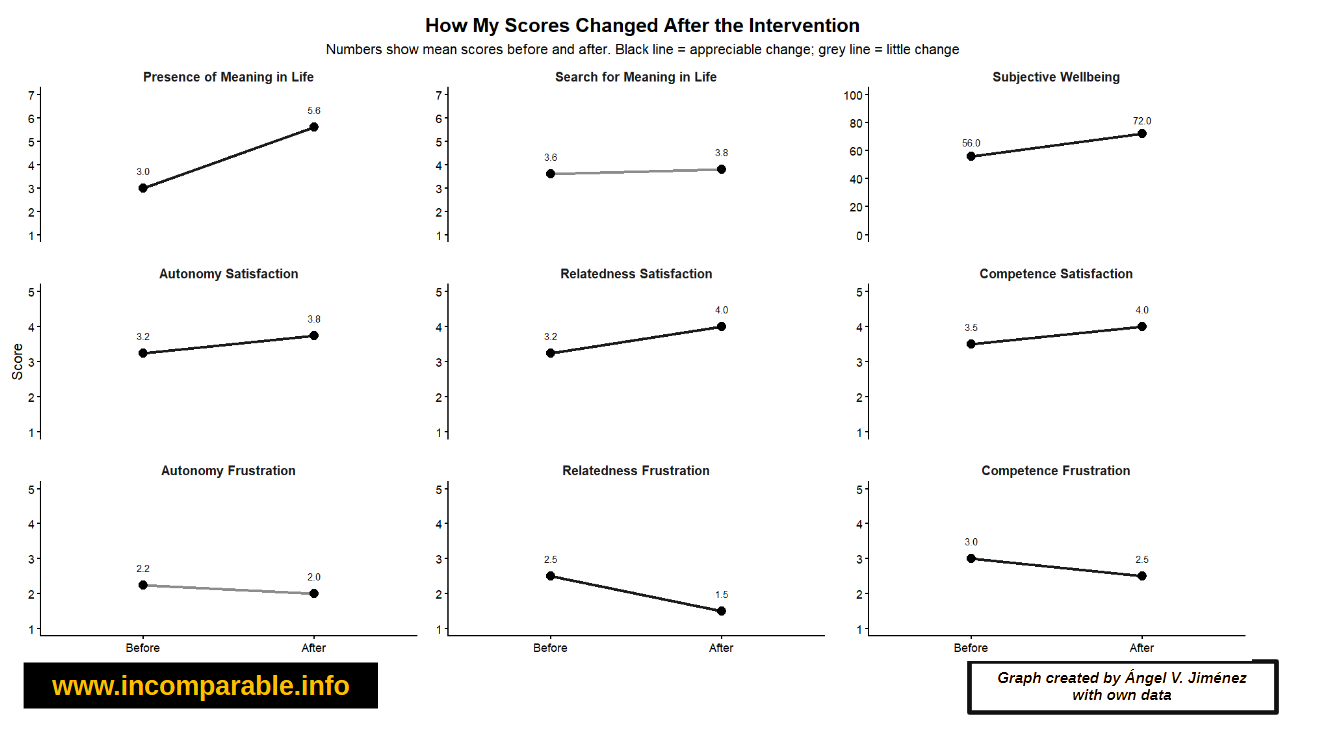
I completed the life crafting written exercises between the 11th and 21st September 2025, at the age of 42. The results of the intervention were very positive. See figure below.
How to read this figure (click to expand)
The figure above summarises how my scores changed before and after completing the life crafting intervention, presented here as an individual case study. Each panel shows one outcome, with two points representing my average score before and after the intervention. The numbers next to the points show the exact values on each scale.
The line connecting the two points shows both the direction and the size of the change. Lines that slope upward indicate increases, while lines that slope downward indicate decreases.
To help distinguish clearly noticeable changes from very small ones, the colour of each line follows a simple rule: on each measure, the full range of the scale is divided into ten equal parts. If the change is larger than one of those parts, the line is shown in black; if the change is smaller, it is shown in grey. This means that changes larger than 0.6 points on the 1–7 meaning in life scales, 0.4 points on the 1–5 basic psychological needs scales, and 10 points on the 0–100 wellbeing scale have been considered noticeable.
For the frustration measures, downward lines indicate improvement, because lower scores reflect less frustration.
This figure is intended as a descriptive overview of my individual results, complementing the group-level findings from the study. It highlights that most outcomes moved in the theoretically expected direction in my case, with particularly strong improvements in presence of meaning and wellbeing, while search for meaning in life and autonomy frustration showed little change.
My presence of meaning in life increased from 3 (low–intermediate) to 5.6 (low–high), while my search for meaning in life hardly changed (3.6 vs 3.8, both low–intermediate). Both variables were measured on a 1–7 scale.
My levels of autonomy satisfaction (3.25 vs 3.75), relatedness satisfaction (3.25 vs 4), and competence satisfaction (3.25 vs 4) increased from intermediate to upper-intermediate levels. My levels of autonomy frustration (2.25 vs 2), relatedness frustration (2.5 vs 1.5), and competence frustration (3 vs 2.5) decreased from intermediate to low or lower-intermediate levels. All these variables were measured on a 1–5 scale.
My wellbeing also increased from 56 (intermediate) to 72 (moderately high) on a 0–100 scale.
My results are broadly in line with the average results reported in the study, but they align even more closely with the theoretical predictions. In particular, my improvement in wellbeing was considerably larger. All outcomes moved in the expected direction except search for meaning in life and autonomy frustration, which hardly changed.
From a qualitative perspective, I found the reflection on core values especially useful. Although I already had intuitions about what my core values were, I had never explicitly named or articulated them before completing the intervention. I found it particularly helpful to reflect on the experiences and people that contributed to the development of these values, as well as to consider why my actions sometimes fail to fully reflect them—and what I can do about this.
The modules on future life and life story were also highly insightful. I realised that my current life was not very different from the life I want to live. Although I felt somewhat lost during the last two chapters of my life (chapters 7 and 8), moving into the next chapter (chapter 9) seemed to require only “more routine, pursuing my professional projects more seriously, and working on my social skills and mindset”. From there, moving to the subsequent chapter (chapter 10) appeared likely to follow naturally.
(I only reflected on the next two chapters, with the latter representing the highest level of fulfilment I could envision.)
Finally, goal setting and reflecting on important relationships increased my confidence that achieving my goals was both realistic and attainable.
Potential Explanations for My Results
I think there are four potential explanations for the effects of the life crafting intervention on myself. First, I may have been influenced by my own expectations. When I applied the intervention to myself, I had already read the study, was familiar with the theoretical basis of life crafting, and believed that this type of intervention could be highly beneficial.
Second, another potential explanation is the effort invested in getting the most out of the intervention. I engaged deeply with all five modules, reflecting carefully on each question and spending a considerable amount of time on the exercises. For example, I completed the questions for the first module on values over the course of three days (although the remaining modules took me less time) and wrote a total of 5,485 words across the entire intervention.
Third, my personal circumstances at the time of completing the intervention may also have played a role. I took some days off during the intervention and spent time walking along the South West Coast Path in Cornwall (UK) and visiting friends, with whom I discussed some of my plans for the future. I had also recently ended a relationship, which felt like an inflection point in my life at the time, and I had positive expectations for the weeks ahead, including the prospect of seeing an important person in my life—whom I reflect on in the relationships module and whom I had not seen for six years. It is quite likely that these experiences contributed to a positive mood and helped me develop a clearer sense of my life as a coherent whole—facilitating goal setting, reconnection with friends, and feelings of personal achievement and autonomy.
The final possible explanation is that my core values closely align with the outcomes measured by the intervention. My core values include freedom, understood as the absence of coercion, which closely aligns with autonomy; competence, which is directly measured as an outcome; affection and care within close relationships, which map well onto relatedness; and honesty, understood as living in accordance with my own values, which relates to coherence. I also value analytical thinking, which does not directly correspond to a measured outcome, but because I perceive myself as competent in this domain, it may indirectly reinforce feelings of competence.
These four potential explanations are not mutually exclusive. In my view, it is likely that all four jointly contributed to the results I observed.
How Can You Benefit from Life Crafting?
Life crafting can help you become more intentional about the choices you make in life by grounding them in your most deeply held values. Even if you are not satisfied with your current trajectory, life crafting can help you clarify where you want to go and envision concrete steps to move closer to that path over the coming years.
Of course, this self-administered intervention requires that you sit down and carefully reflect on each of the questions. This reflection is necessary if you want to benefit from it. However, while reflection itself can be valuable, the greatest benefits are likely to occur when you act in accordance with your core values and actively work towards your professional, social, recreational, family-related, and health-related goals.
One challenge for many people is completing the intervention over several days. In the study, 109 participants initially volunteered, but only 41 completed the intervention. Notably, participants who dropped out had lower initial wellbeing than those who completed it (47.58 vs 57.95). This suggests that individuals with lower levels of wellbeing might benefit from additional support—such as working with a professional (e.g. a psychologist, coach, or educator), joining a support group, or using an accountability partner—when undertaking the intervention.
Conclusion
In this post, I have shown how a self-administered life crafting intervention—consisting of reflection on your most cherished values, intrinsic interests, important relationships and social contributions, life narrative, and personal goals—can be beneficial for increasing meaning in life, as well as for improving satisfaction of the basic psychological needs of autonomy, competence, and relatedness.
I have illustrated this using data from the reviewed study, as well as through my own self-application of the intervention.
Life crafting may be able to help you too—I’d love to hear your thoughts.
About the Author
Ángel V. Jiménez is passionate about intentional living, scientific psychology, and the analysis of human behavior from an evolutionary perspective. He earned his PhD at the University of Exeter (UK), where he studied processes of status acquisition and interpersonal influence, with particular emphasis on the role of prestige in social learning. After completing his doctorate, he conducted postdoctoral research at Brunel University London and the University of Exeter. He currently teaches research methods for psychology.
Through this website, he shares practical, research-informed, and reflective content on intentional living and psychology, helping readers better understand human nature and make more deliberate choices in an increasingly complex and distracted world.

References
These are the materials consulted to prepare this article. Interested readers can review them to delve deeper into the topics discussed.
Main Study
Napier, A. D., & et al. (2025). Life Crafting: Pilot-Testing an Online, Multidimensional Intervention for Emerging Adults. Journal of Happiness and Health. https://doi.org/10.1007/s41042-025-00224-2
Scientific Publications
Boreham, I. D., & Schutte, N. S. (2023). The relationship between purpose in life and depression and anxiety: A meta‐analysis. Journal of Clinical Psychology, 79(12), 2736-2767. https://doi.org/10.1002/jclp.23576
Copeland, A., Jones, A., Acuff, S. F., Murphy, J. G., & Field, M. (2023). Meaning in life: investigating protective and risk factors for harmful alcohol consumption. Addiction Research & Theory, 31(3), 191-200. https://doi.org/10.1080/16066359.2022.2134991
Czekierda, K., Banik, A., Park, C. L., & Luszczynska, A. (2017). Meaning in life and physical health: systematic review and meta-analysis. Health Psychology Review, 11(4), 387-418. https://doi.org/10.1080/17437199.2017.1327325
He, X.-X., Wang, X.-q., Steger, M. F., Ji, L.-J., Jing, K., Liu, M.-f., & Ye, B.-j. (2023). Meaning in life and psychological distress: A meta-analysis. Journal of Research in Personality, 104, 104381. https://doi.org/10.1016/j.jrp.2023.104381
Hill, P. L., Turiano, N. A., Mroczek, D. K., & Burrow, A. L. (2016). The value of a purposeful life: Sense of purpose predicts greater income and net worth. Journal of Research in Personality, 65, 38-42. https://doi.org/10.1016/j.jrp.2016.07.003
Kim, G., Shin, S. H., Scicolone, M. A., & Parmelee, P. (2019). Purpose in Life Protects Against Cognitive Decline Among Older Adults. The American Journal of Geriatric Psychiatry, 27(6), 593-601. https://doi.org/10.1016/j.jagp.2019.01.010
King, L. A., & Hicks, J. A. (2021). The Science of Meaning in Life. Annual Review of Psychology, 72(Volume 72, 2021), 561-584. https://doi.org/https://doi.org/10.1146/annurev-psych-072420-122921
Li, J.-B., Dou, K., & Liang, Y. (2021). The Relationship Between Presence of Meaning, Search for Meaning, and Subjective Well-Being: A Three-Level Meta-Analysis Based on the Meaning in Life Questionnaire. Journal of Happiness Studies, 22(1), 467-489. https://doi.org/10.1007/s10902-020-00230-y
Martela, F., Ryan, R. M., & Steger, M. F. (2018). Meaningfulness as Satisfaction of Autonomy, Competence, Relatedness, and Beneficence: Comparing the Four Satisfactions and Positive Affect as Predictors of Meaning in Life. Journal of Happiness Studies, 19(5), 1261-1282. https://doi.org/10.1007/s10902-017-9869-7
Martela, F., & Steger, M. F. (2016). The three meanings of meaning in life: Distinguishing coherence, purpose, and significance. The Journal of Positive Psychology, 11(5), 531-545. https://doi.org/10.1080/17439760.2015.1137623
Mostarac, I., & Brajković, L. (2022). Life After Facing Cancer: Posttraumatic Growth, Meaning in Life and Life Satisfaction. Journal of Clinical Psychology in Medical Settings, 29(1), 92-102. https://doi.org/10.1007/s10880-021-09786-0
Napier, A. (2025). Life crafting: Developing and testing an online meaning-making intervention for emerging adults (Doctoral thesis, The University of Melbourne). https://hdl.handle.net/11343/357813
Napier, A. D., Slemp, G. R., & Vella-Brodrick, D. A. (2024). Crafting One’s Life and its Relationship with Psychological Needs: A Scoping Review. Applied Research in Quality of Life, 19(4), 2063-2101. https://doi.org/10.1007/s11482-024-10322-z
Napier, A. D., Slemp, G. R., & Vella-Brodrick, D. A. (2024). Life Crafting and Self-Determination: An Intervention to Help Emerging Adults Create an Authentic and Meaningful Life. Emerging Adulthood, 12(4), 629-647. https://doi.org/10.1177/21676968241252196
Ryan, R. M., & Deci, E. L. (2000). Self-determination theory and the facilitation of intrinsic motivation, social development, and well-being. American Psychologist, 55(1), 68-78. https://doi.org/10.1037/0003-066X.55.1.68
Schippers, M. C., & Ziegler, N. (2019). Life Crafting as a Way to Find Purpose and Meaning in Life. Frontiers in Psychology, 10, 2778. https://doi.org/10.3389/fpsyg.2019.02778
Schwartz, S. H. (1992). Universals in the Content and Structure of Values: Theoretical Advances and Empirical Tests in 20 Countries. In M. P. Zanna (Ed.), Advances in Experimental Social Psychology (Vol. 25, pp. 1-65). Academic Press. https://doi.org/10.1016/S0065-2601(08)60281-6
Steger, M. F., Oishi, S., & Kesebir, S. (2011). Is a life without meaning satisfying? The moderating role of the search for meaning in satisfaction with life judgments. The Journal of Positive Psychology, 6(3), 173-180. https://doi.org/10.1080/17439760.2011.569171
Sutin, A. R., Luchetti, M., Karakose, S., Stephan, Y., & Terracciano, A. (2025). Meaning in life and all-cause and cause-specific mortality in the UK Biobank. Journal of Psychosomatic Research, 188, 111971. https://doi.org/10.1016/j.jpsychores.2024.111971
Tam, K. W., Zhang, D., Li, Y., Xu, Z., Li, Q., Zhao, Y., Niu, L., & Wong, S. Y. S. (2025). Meaning in life: bidirectional relationship with depression, anxiety, and loneliness in a longitudinal cohort of older primary care patients with multimorbidity. BMC Geriatrics, 25(1), 195. https://doi.org/10.1186/s12877-025-05762-7
Vos, J. (2021). Cardiovascular disease and meaning in life: A systematic literature review and conceptual model. Palliative & Supportive Care, 19(3), 367-376. https://doi.org/10.1017/S1478951520001261
Yang, X., Xiao, L., Lan, Y., Xue, J., & He, Y. (2025). A meta-analysis of the meaning in life and suicidal ideation based on Chinese samples. Frontiers in Psychology, Volume 16 – 2025. https://www.frontiersin.org/journals/psychology/articles/10.3389/fpsyg.2025.1610351
Yu, E. A., & Chang, E. C. (2019). Meaning in life as a predictor of optimism: How parents mattering matters to Asian and European Americans. Personality and Individual Differences, 138, 366-369. https://doi.org/10.1016/j.paid.2018.10.031